
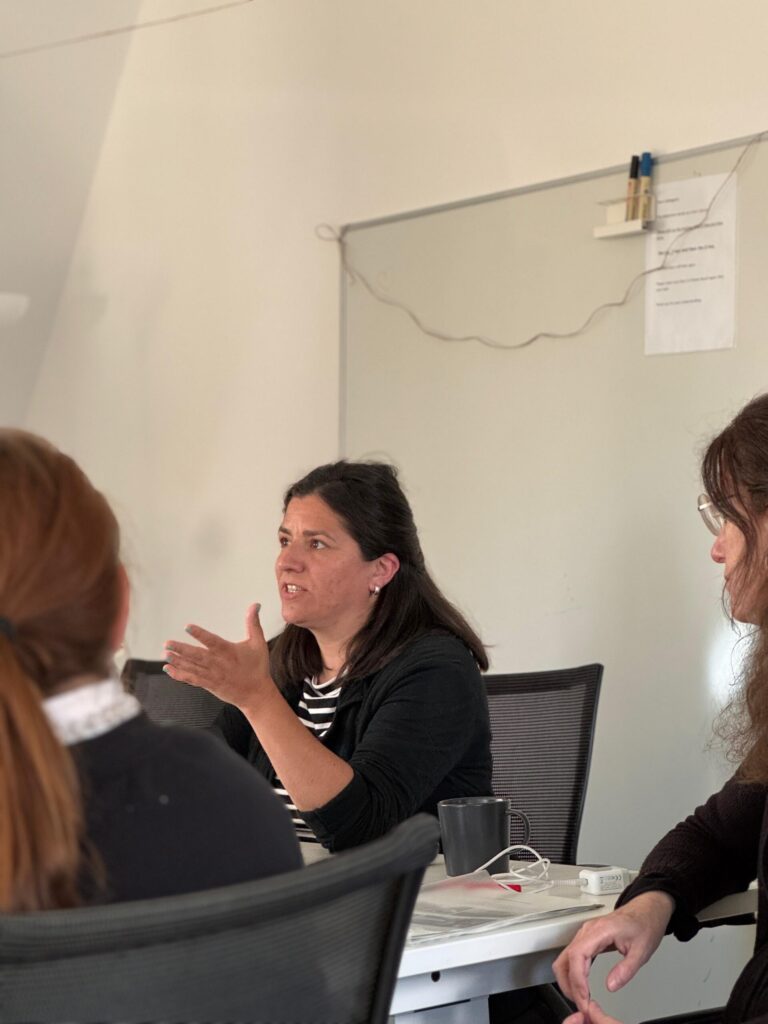
On 12 May 2026, FAU CHREN welcomed Professor Dr Lila García for a Human Rights Colloquium examining the relationship between law, state power, and the production of precarious forms of human mobility.
Event recap
Professor García’s presentation explored the historical and contemporary role of law in legitimizing inequality. Drawing on insights from the study of the abolition of slavery and the recognition of women’s political rights, Dr García argued that these injustices were not simply tolerated by legal systems but were (at times) actively constituted and maintained through them. Building on this historical perspective, Professor García turned to the legal treatment of migrants and asylum seekers, arguing that contemporary migration regimes similarly embed inequality within legal frameworks governing mobility, status, and belonging. Through systems of categorization, documentation, and administrative discretion, these legal structures produce conditions of ‘rightlessness,’ rendering exclusion both legally sanctioned and socially normalized.
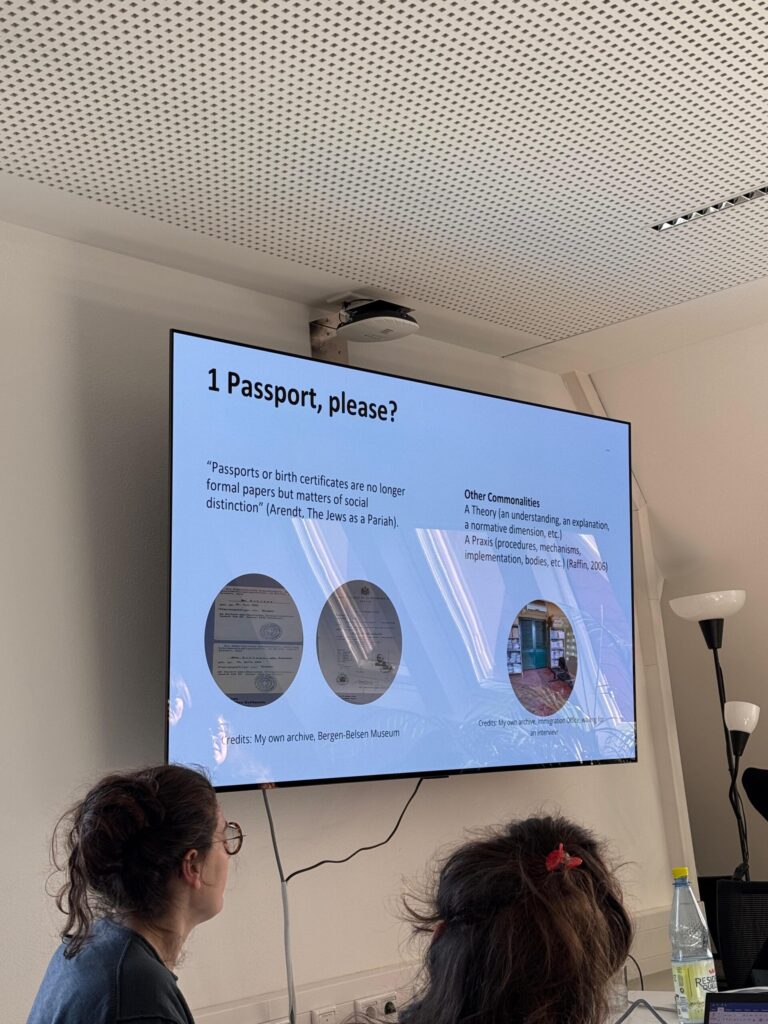
Moving beyond debates about implementation gaps in human rights law or questions of whether migrants are adequately protected by existing legal frameworks, Professor García therefore proposed a more fundamental rethinking of the relationship between human rights and human mobility. She argued that human rights should be understood as inherently portable and universal guarantees that accompany individuals across borders, rather than rights contingent upon membership within a particular national legal order. This perspective, she suggested, restores the transformative potential of human rights by challenging the exclusions produced by state-centred legal systems rather than merely accommodating them.
The presentation prompted an engaging discussion on migration governance, legal categorization, the relationship between sovereignty and human rights, and the possibilities for reimagining human rights protections in an increasingly mobile world.
This event was supported by funding from the Alexander von Humboldt Foundation, provided to the Chair for Human Rights Law at FAU.
Speaker bio
Professor Dr Lila Emilse García is a senior researcher at the National Council for Scientific and Technical Research (CONICET), Argentina, Adjunct (Associate) Professor at the National University of Mar del Plata, where she teaches International Contemporary Politics and Argentine Foreign Policy, and lead professor of the seminar on Economic, Social, Cultural and Environmental Rights at the National University of La Pampa (UNLPam). She is Principal Investigator of the project Geopolitics of Human Mobility. (F)actors in the Politics of Classification of Contemporary Human Mobility in and from the Global South (2025–2026) at the University of Mar del Plata, and Country Expert in the University of Bologna’s ACCESS: The Evolving Role of Courts in Shaping Access to Asylum project. She was a Visiting Fellow at the Chair for Human Rights Law at FAU, supported by funding from the Alexander von Humboldt Foundation in 2026.
About the FAU CHREN Human Rights Colloquium
Organized by the FAU Research Center for Human Rights Erlangen-Nürnberg (FAU CHREN), our inter- and transdisciplinary brings together scholars and practitioners to discuss current issues in human rights research and practice.
Colloquia are organised on a rolling basis and are co-convened by Dr. Janina Heaphy and Prof. Dr. Eva Pils. Events are invitation-only. Enquiries should be directed to the co-conveners and/or to humanrights@fau.de.