
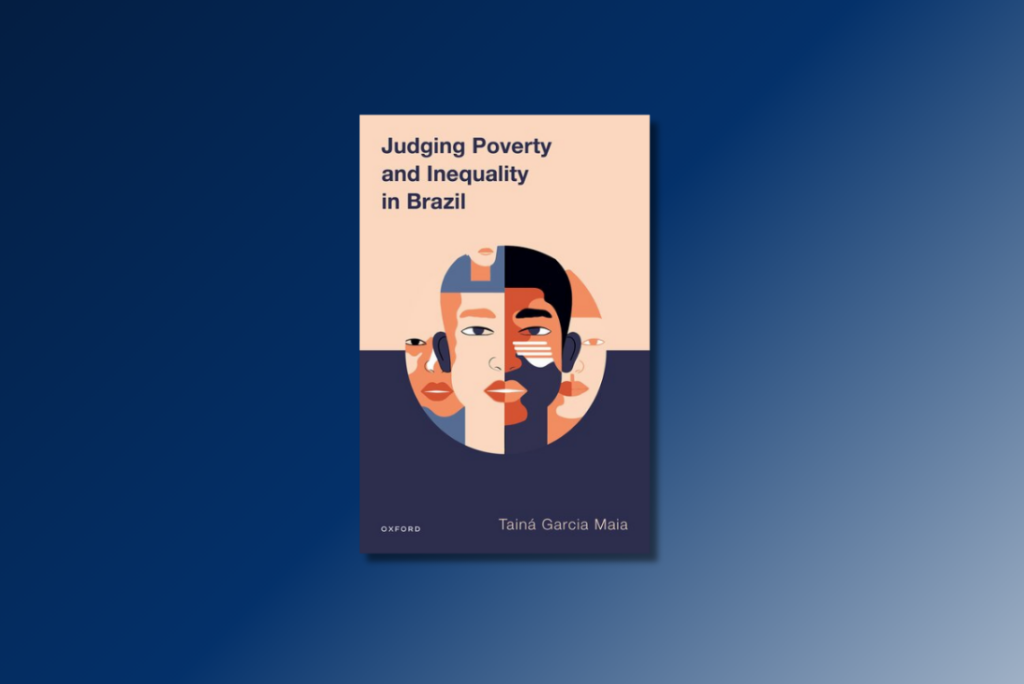
How do courts address poverty and inequality? A new interdisciplinary study examines case law in Brazil and its implications for human rights and social justice. We spoke with Dr Tainá Garcia Maia about her new book.
What can we learn from your research on Brazil regarding the protection of human rights, especially at a time when poverty and inequality are on the rise in many parts of the world?
My research on Brazil reminds us of the profound interconnection of human rights. Persistent structural discrimination can cause and perpetuate poverty cycles. In turn, poverty results in a spectrum of harms, ranging from material deprivation to social exclusion and hindered participation in society. In other words, inequality can both cause and result from poverty. This circular relationship between the two is a reminder of the need to address human rights deprivation with attention to the interconnection and interdependence of rights. Addressing rights without taking their indivisibility, interconnection, and interdependence into consideration results in partial, and often insufficient, responses to broader social challenges.
What is the most important insight that readers of your book can take away?
The most important insight I hope readers will gain from the book is that law – and courts – can play an important role in the fight against poverty.
If law has historically created and legitimised inequalities that perpetuate poverty cycles nationally and internationally, so too can it create and validate key conditions for change to take place.
The study of Brazil in the 21st century shows the transformative potential of law and courts. Furthermore, it reminds us that a court’s inaction in recognising an obligation to reverse poverty is not neutral. It is just as normatively charged as the decision of so-called activist courts to call on states to adopt positive measures to reverse poverty.
What did you find to be the biggest challenge in writing this book?
Writing a book is necessarily a challenge – although a very interesting and ultimately fun one. I could point to nights spent writing after entering into a writing flow, the wedding of a childhood best friend I could not attend in my home country and the hug I could not give her (which still breaks my heart), or more everyday absences, like the mindful presence I couldn’t always give my family at dinner.
But those are expected parts of writing a book, and I was fortunate enough to have a strong support structure throughout: a husband who prepared a great writing environment whenever I entered that flow, incredible friends who livestreamed the wedding, and a family who knew I would soon return to my fullest presence in our everyday life. Writing a book, in the end, was never a lonely experience for me — I had support alongside every step of the process.
So the most challenging part of writing my book was something that no one else could help me with: anxiety. While writing itself is, for me, the opposite of anxiety — it brings me to my most mindful state — publishing a book for the first time required me to learn patience and calm at a much deeper level. I was very fortunate to publish with my first choice of publisher. But even so, the whole process took well over a year. Waiting through reviews to the final decision on publication with such an amazing publisher and peer reviewers was a privilege – but it was, without question, the most challenging part.
The book was published by Oxford University Press and is available as open access.
Maia, T.G., 2026. Judging Poverty and Inequality in Brazil. Oxford: Oxford University Press.
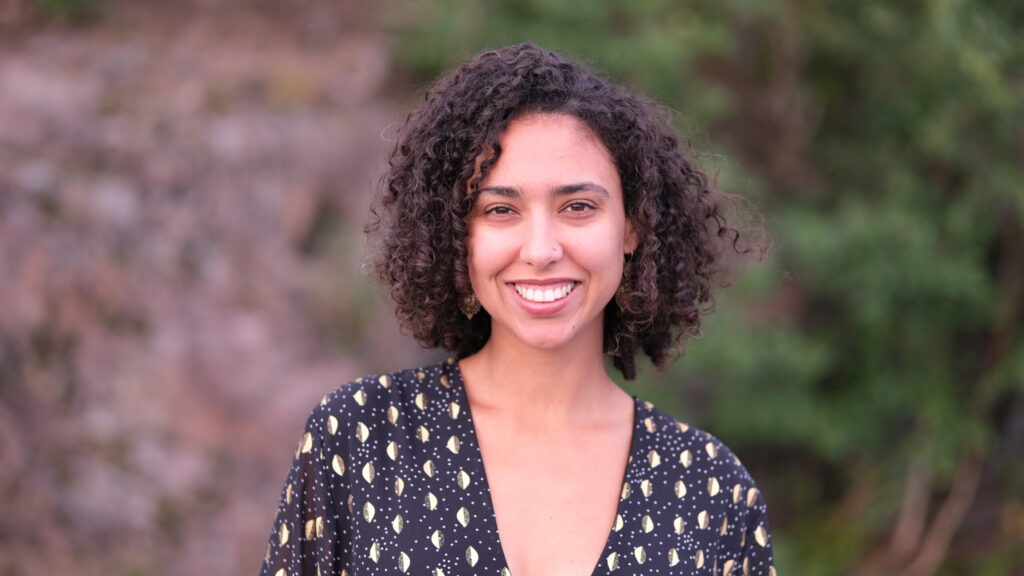
Dr Tainá Garcia Maia is a postdoctoral researcher at FAU CHREN, where she is expanding her research on the use of equality as a tool for the legalization of poverty through a comparative study of the practices of Latin American supreme courts. Other areas of her postdoctoral research include democracy and autocratization, inequality and social stratification, as well as human rights and technology. In 2023, she completed her Ph.D. in law (summa cum laude) at the University of Münster and the Federal University of Minas Gerais, focusing on the connections between poverty and inequality using Brazil as a case study. She holds a master’s degree in the Theory and Practice of Human Rights from the University of Oslo and received a Fritt Ord student scholarship for her master’s thesis. Dr. Garcia Maia has worked as a researcher at the University of Münster as part of the ERC Consolidator Grant project “Correcting Inequality through Law,” as a visiting scholar at the Brazilian Supreme Court, as a visiting professor at the Inter-American Court of Human Rights, and as a special advisor to the Permanent Mission of Brazil to the United Nations in New York.